Black CEO Denied First-Class Seat — One Call Freezes 152 Flights and $2.1 Billion in Revenue
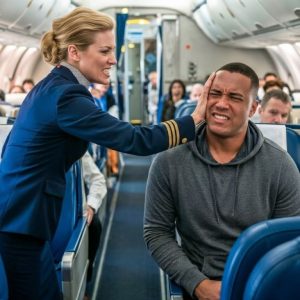
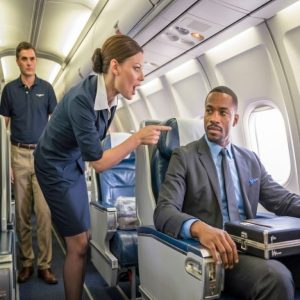
He was a ghost in their system, a titan hidden in plain sight. They saw a black man in a tailored suit and assumed he was out of place in their first class world. They didn’t know his name, Alexander Thorne, was the very architect of the digital kingdom they operated. They denied him his seat, a petty insult fueled by latent prejudice.
They had no idea their simple act of discrimination wasn’t just an insult to a man. It was a kill switch for their entire global operation. In response, he made one quiet phone call. And with that single call, 152 aircraft were frozen on the tarmac, and the world watched as a $2.1 billion aviation empire began to fall from the sky.
The firstass lounge of transatlantic air at JFK was a carefully curated bubble of tranquility, a hushed sanctuary designed to insulate its patrons from the plebeian chaos of the main terminal. Polished chrome and muted gray tones absorbed the sound, while the soft clinking of porcelain on saucer and the respectful murmur of conversation provided a soothing soundtrack.
It was a world of assumed privilege where the right suit and the right watch were supposed to act as an unspoken passport. Alexander Thorne possessed both. Yet he seemed to be an anomaly the bubble couldn’t quite accept. He sat not in the center of the lounge, but at a discrete table near the expansive windows overlooking the rainsicked tarmac.
His suit was a bespoke Tom Ford, a deep charcoal that whispered rather than shouted its expense. On his wrist, a PC Philipe Calatraa, a masterpiece of understated elegance. At 38, Alexander had the kind of quiet intensity that could be unsettling. His mind, which had built a tech empire from a single revolutionary logistics algorithm, was always working, always processing, always seeing the patterns others missed.
He was the founder and CEO of Nexus Logistics, the invisible nervous system that powered a staggering 30% of global shipping and aviation management. Transatlantic Air was one of his biggest clients. He wasn’t reading the provided newspapers or sipping champagne. He was reviewing a complex data schematic on his tablet.
His brow furrowed in concentration. To the casual observer, he was just another businessman. But to the lounge attendant, a woman named Brenda, with a tightly pinned bun and an even tighter smile, he was a puzzle that didn’t fit. She had refreshed the coffee of the ruddy-faced hedge fund manager three times, offered a warm quason to the blonde ais scrolling through Instagram.
But she had pointedly avoided Alexander’s table. He noticed, of course, he noticed everything. It was a lowgrade, persistent hum of otherness he’d lived with his entire life. The silent questioning in spaces where his presence was unexpected. The boarding call for flight 88 to London Heath Row echoed softly through the lounge.
Alexander packed his tablet away, stood up, and adjusted his cuffs. He was heading to London to finalize a multi-billion dollar acquisition, a deal that would make Nexus Logistics the undisputed global leader. He walked towards the dedicated priority lane at gate A17. His boarding pass ready on his phone.
The gate agent was a woman in her late 40s named Carol Peterson. She had the weary, slightly imperious heir of someone who had spent two decades wielding the minor power of deciding who gets on a plane first. She glanced at Alexander, then at the couple behind him, and offered them a bright, welcoming smile. Good morning, Mr. and Mrs. Albbright.
Right this way. When Alexander stepped forward, the smile vanished, replaced by a all of professional indifference. May I see your boarding pass? He held out his phone. Carol scanned it and a small frown creased her forehead. She tapped at her screen, her nails making sharp pecking sounds. I’m sorry, sir.
There seems to be a problem with your seat assignment. Alexander kept his voice even and low. I have a confirmed seat 2A. I booked it 2 months ago. The system is showing a conflict, she said, not looking at him instead, focusing intently on her monitor as if it held the secrets of the universe. It appears the seat is already occupied.
We’ve had a lastminute equipment change and the new aircraft has a different configuration. It was a standard well-worn excuse, but Alexander’s mind immediately flagged the inconsistencies. An equipment change for a flagship transatlantic route like the A380 would have generated an automated notification hours if not days in advance.
His Nexus logistics software, in fact, was designed to prevent exactly these kinds of lastminute surprises. He knew the exact configuration of every plane in Transatlantic’s fleet. He knew this was a lie. That’s unfortunate, Alexander said, his calmness, a stark contrast to the simmering frustration building within him.
What is the new assignment? Carol tapped a few more keys. We can accommodate you in our premium economy cabin, seat 24B. It’s a very comfortable middle seat, she added the final two words, dripping with a subtle dismissive condescension. Alexander didn’t move. I paid for a firstass ticket. I expect a firstass seat.
Behind him, the Albrights were settling into their conversation, but others in the priority line were beginning to watch their expressions. A mixture of impatience and mild curiosity. The theater of public inconvenience was beginning. “Sir, as I said, the cabin is full,” Carol insisted, her voice gaining a slight edge.
She finally looked at him, her eyes flicking over his expensive suit as if it were a costume. It was a look he knew well, the look of someone trying to reconcile his appearance with their preconceived notions. How could this man possibly belong here? Is the CEO of Transatlantic, Mr. Davies, aware that his gate agents are unilaterally downgrading fullair first class passengers without cause? Alexander asked his voice, still unnervingly quiet.
The use of the CEO’s name, a name she usually only heard in corporate memos, momentarily flustered Carol. Her professional mask slipped, revealing a flash of raw annoyance. Sir, I am the authority at this gate. There are no first class seats available. You can either take the seat in premium economy or we can book you on a later flight.
I have a non-negotiable meeting in London. I will be on this flight, Alexander stated, not as a request, but as a fact. At that moment, a flight attendant from the aircraft, a sharp featured man named Gary, walked up the jet bridge to the gate desk. Is there a problem here, Carol? We’re ready to close the door. Carol gestured towards Alexander with a flick of her head.
This gentleman is refusing to accept his new seat assignment. Gary looked Alexander up and down, a smirk playing on his lips. “Sir, we have a plane to fly. If you’ve been given a seat, you need to take it. We can sort out any financial compensation later.” The insinuation was clear. This was about money, not principle. He saw a man trying to shake them down for a refund.
The combined force of their dismissiveness, the casual stripping of his status, the unspoken accusation, it coalesed into a familiar bitter poison. It was the thousandth cut in a life of a thousand cuts. But this time, the cut was being delivered by a company that paid him hundreds of millions of dollars a year to ensure their operations ran with flawless integrity.
The irony was staggering. Alexander held their gaze for a long moment. He saw no room for reason, no path for deescalation that didn’t involve his own humiliation. They had already tried and convicted him in the court of their own biases. He gave a slow, deliberate nod. “Fine,” he said, his voice, betraying no emotion. “I’ll take seat 24B.
” Carol and Gary exchanged a triumphant glance. The problem had been handled. The man had been put in his place. “Thank you for your cooperation,” Carol said, her bright false smile returning as she turned to the next passenger. Alexander walked down the jet bridge, not towards the prestigious left turn into first class, but to the right into the crowded main cabin.
He found 24B, a cramped middle seat between a fidgety tourist and a man who had already claimed both armrests. As he settled in, the indignity of it all washed over him, hot and sharp. But beneath the anger, a cold, clear thought began to form. They thought they had won a small victory. They thought they had put him in his place.
They had no idea that from this tiny, insignificant middle seat, he was about to move the world. He pulled out his phone. He didn’t call customer service. He didn’t call the CEO, Mr. Davies. He made a single call to a man named Kenji Tanaka, his lead systems architect and the co-designer of the Nexus Logistics Platform. The call was brief.
The instructions were simple. Kenji, Alexander said, his voice a low whisper. Initiate protocol Omega on the transatlantic account. Authorization code Thorn Alpha Zero. There was a pause on the other end, a beat of stunned silence. Kenji knew what Protocol Omega was. It was a ghost in the machine, a failafe so deeply embedded, so powerful that they had nicknamed it the God switch.
It had never been used. “Alex, are you sure?” Kenji’s voice was filled with concern. “The consequences? I’m sure.” Alexander said, his voice as cold as the stratosphere outside his window. “Execute,” he hung up the phone just as the cabin door sealed shut with a heavy thud. The engines began to whine and the plane pushed back from gate A17.
On the ground, Carol Peterson was tidying her desk, satisfied with a job well done. Gary was in the firstass galley, laughing with a colleague. Neither of them knew that their world had just been put on an irreversible countdown. The quiet man in 24B had just pulled the pin on a grenade that would detonate not with a bang, but with the silent catastrophic freezing of an entire airline.
The karma wouldn’t be instant, but it would be absolute. The climb of flight 88 out of New York was smooth, a powerful, inexurable ascent through the bruised purple and gray of the storm clouds. Below the sprawling metropolis shrank to a glittering circuit board of light, then vanished beneath the cloud deck. Inside the cabin, the familiar rhythms of a longhaul flight began.
The ding of the seat belt sign turning off the rustle of passengers getting comfortable. The low hum of the engines settling into a monotonous drone for the 7-hour journey across the Atlantic. In seat 24b, Alexander Thorne was an island of stillness in the sea of humanity. The man to his right was already snoring softly, his head loling against the window.
The tourist to his left was engrossed in a mindless comedy on the seatback screen. No one paid him any mind. He was just another face in the crowd, another body in a metal tube hurtling through the dark. This anonymity, which had been the source of the insult, was now his greatest asset. He declined the drink service, waving away the cart with a polite but firm shake of his head.
He didn’t open his tablet. He didn’t put on headphones. He simply sat his hands resting on his lap, his gaze fixed on the back of the seat in front of him. But his mind was a whirlwind of activity, a high-speed processor running through millions of lines of code, not of software, but of consequence. There was a cold fury in his chest, a feeling he hadn’t allowed himself to truly feel in years.
It wasn’t the hot, explosive anger of youth. This was a different kind of rage, honed and sharpened by a lifetime of similar, if smaller, aggressions. It was the rage of exhaustion. The exhaustion of having to constantly prove his worth, of having to strategically navigate rooms where his success was seen as an exception, a fluke, or a threat.
He had built an empire on logic, on the elegant certainty of data and systems. His world was one of order and precision. Yet time and again he was confronted by the messy, illogical and deeply ingrained chaos of human prejudice. the gate agent, Carol, and the flight attendant, Gary. They hadn’t seen Alexander Thorne, CEO of Nexus Logistics, the man whose company held the key to their own employer’s operational viability.
They had seen a black man, and in a fraction of a second, their brains, conditioned by a society of implicit biases, had made a thousand tiny, insulting calculations. He couldn’t possibly be a legitimate firstass passenger. He must be trying to pull something. He should be grateful for whatever he was given.
The downgrade wasn’t just a logistical issue. It was a re-calibration of his status to fit their world view. He thought about protocol Omega. It was a digital masterpiece of mutually assured destruction, conceived during the company’s early days as a defense against a hostile takeover or a catastrophic client default.
Buried deep within the Nexus logistics architecture that transatlantic air leased for a fortune. The protocol was a cascading shutdown sequence. It wasn’t a hack. It wasn’t an attack. It was by the very letter of the multi-billion dollar contract, Transatlantic had signed a system integrity verification and hold. Upon activation, it would begin by flagging every single one of the airlines assets managed by the Nexus system, which was quite literally everything from crew scheduling and fleet management to fuel logistics baggage handling and the crucial flight
booking and ticketing network. The system would then place a verification hold on any new command. A plane couldn’t be assigned a new crew. A flight plan couldn’t be filed. A ticket couldn’t be sold. A bag couldn’t be wrote. The initial effect would be subtle. A few confusing errors on monitors in an operation center somewhere in Dallas.
But like a virus, the holds would multiply with each passing minute, each new attempt to use the system. Within an hour, it would metastasize from a localized issue to a full-blown systemic paralysis. It was designed to be elegant, untraceable at first, and utterly crippling. It was a weapon that could bring a global corporation to its knees without firing a single shot.
And he had just deployed it. From a middle seat in economy, the gravity of his own command was not lost on him. This wasn’t just about Carol and Gary anymore. This would affect thousands of employees, hundreds of thousands of passengers. It would royal the stock market. It would create chaos.
He felt a pang of something complex. Not quite guilt, but a heavy sense of responsibility. Yet, what was the alternative? To file a complaint form. to write a strongly worded email to a customer service address that would likely be answered with a template apology and a $200 voucher. He had tried that path before in different circumstances, in different boardrooms, at different gates.
He had calmly explained rationally, debated, and politely pointed out injustice, and the system had absorbed his complaints with a placid smile and continued unchanged. The world, he had learned, did not change with polite requests. It changed when the powerful were forced to feel the consequences of their actions or inactions.
And today, transatlantic air, a behemoth of industry, would learn that the silent man in 24B held a power they couldn’t called comprehend. An hour into the flight, he paid for the satellite Wi-Fi. His personal email was firewalled and encrypted, untraceable by the airlines public network.
A single email was waiting for him from Kenji. Subject O is active. The body of the email contained just one line. Initial cascade complete. Verification holds are populating. Estimated time to critical system failure tus 45 minutes. Godspeed, Alex. Alexander closed the laptop. There was nothing more to do but wait. The dye was cast.
He leaned his head back against the seat, closed his eyes, and for the first time on the flight allowed himself to breathe. He was not a victim in this story. He was a reckoning, and the storm was just beginning to gather on the horizon. The silence in his demeanor was a mask for the tectonic shift he had just initiated. A shift that was at that very moment starting to send tremors through the foundations of transatlantic air.
The quietest man in the room, it turned out, was the loudest. The transatlantic air global operations control center, GOCC, in Dallas, Texas, was the company’s heart and brain. a vast stadium seating room nicknamed the bridge. Its centerpiece was a colossal wall of screens displaying a realtime map of the world. On it, 152 tiny airplane icons, each representing an active transatlantic flight, crawled across continents and oceans.
Hundreds of controllers, dispatchers, and logisticians sat at tiered consoles, a hive mind dedicated to the flawless execution of a celestial ballet, ensuring every flight departed, flew, and arrived safely and on time. The room hummed with a constant controlled energy, the low murmur of a thousand moving parts working in perfect harmony.
At 7:30 p.m. Central time, the first discordant note was played. An alert blinked on the screen of a senior dispatcher named Maria Flores. It was a simple innocuous flag. Crew assignment failed. A footh. She was trying to assign a reserve flight crew to flight 214 from Dallas to Frankfurt, whose original captain had called in sick.
She tried again, the same error. “Hey, Chuck,” she called over her shoulder to a systems technician. “Nexus is being glitchy. Can’t assign the Frankfurt crew.” Chuck, a lanky man perpetually armed with a halfeaten bag of pretzels, ambled over. Probably just a server lag. Try a manual override. Maria attempted the override. The system responded with a new, more baffling message.
Manual override denied. System integrity hold. Chuck frowned. Integrity hold. That’s not one of ours. Must be a Nexus side flag. I’ll ping their support. He sent a low priority support ticket to Nexus Logistics. Expecting a simple fix. It was the digital equivalent of reporting a flickering light bulb. But then another light started flickering in the baggage handling section.
A supervisor found he couldn’t generate routting manifests for three connecting flights out of Chicago. The system wouldn’t accept the commands. Across the room, a fuel logistics coordinator stared at his screen in disbelief. The automated fuel loading requests for the entire evening bank of flights on the east coast had been rejected. Within 15 minutes, the lowcont controlled hum of the bridge was being punctuated by rising tones of confusion and frustration.
I’m locked out of the catering manifest for London. Ticketing in Miami just went dark. I can’t update the flight plan for the Red Eye to LAX. The giant wall map, the pride of the GOCC, suddenly became a source of horror. The icon for flight 91 preparing for departure from Boston to Paris began to blink red.
The status changed from on time to ground hold. Then another in Denver, then two more in San Francisco. Within the next 10 minutes, a dozen planes blinked red. They were all on the ground, fully boarded, fueled, and ready. But they were unable to get clearance for push back because their digital flight plans could not be validated by the system.
They were in essence prisoners on the tarmac. The director of the GOCC, a formidable man named Frank O’Connell, felt a cold knot of dread tighten in his stomach. This wasn’t a glitch. This wasn’t a server lag. This was coordinated. This was systemic. “Get me the Nexus support lead on the phone now,” he barked, his voice, cutting through the rising chatter.
“I don’t want a ticket number. I want a human being.” A frantic technician finally got through to the Nexus Logistics 24/7 corporate support line. “The response he received was chillingly calm.” Yes, we are aware of the flags on the transatlantic account, said the voice on the other end. A man who identified himself as a level 4 integrity monitor.
A system integrity verification hold has been activated. We are monitoring the situation. Your monitoring, the technician sputtered. Our entire network is seizing up. You have to deactivate it. Deactivation requires a seale authorization from our side, the voice replied with an infuriating lack of urgency.
Our executives are not available at this time. Frank Oonnell slammed his hand on his desk. What the hell does that m mean? What triggered it? The system registered a customer integrity violation flag, the voice said coolly. A what? What does that even mean? Frank yelled into the phone. “I’m afraid that information is privileged. We will update you when we have more to share.” And then the line went dead.
The chaos on the bridge escalated exponentially. The wall of screens was now a Christmas tree from hell with dozens of blinking red icons. The incoming calls display was a solid wall of red. Airport managers from across the country were screaming at them. The FAA was demanding to know why a major airline was spontaneously grounding its own fleet.
The financial implications began to flash on a secondary screen, a ticker that normally showed positive revenue projections. Now it was a torrent of red downward-facing arrows. Every minute a plane sat on the ground cost them thousands in fuel crew salaries and airport fees. The cost of rebooking thousands of stranded passengers was astronomical.
But the real damage was the cascading effect. Cancelelling one flight meant stranding passengers who were supposed to connect to a dozen other flights. The entire exquisitely complex web of their killer global operations was unraveling in real time. By 900 p.m. Central time, less than 2 hours after Alexander Thorne made his quiet phone call, the situation was catastrophic.
152 aircraft were effectively frozen. Some were trapped at gates fully boarded. Others were stuck on taxiways. None could move. The digital heart of transatlantic air had been stopped. The COO, Richard Maxwell, a man known for his icy demeanor, burst onto the bridge, his face ashen. He had been pulled out of a dinner with the governor.
Frank report. What is this a cyber attack? Is it the Chinese, the Russians? It’s not an attack, Frank said, his voice grim as he gestured to the chaos around them. It’s worse. It’s coming from inside the system. Nexus Logistics has flipped a switch and locked us out of our own airline.
Richard stared at the wall at the bleeding ticker that now showed an estimated loss of over half a billion dollars. The number was climbing with sickening speed. The ghost in the machine was no longer a ghost. It was a monster, and it was methodically and efficiently strangling their company to death. Find me the CEO of Nexus Logistics, Richard commanded his voice, shaking with a rage that was quickly being eclipsed by sheer terror.
Get me Alexander Thorne on the phone now. A junior analyst after a frantic search looked up from her screen, her face pale. Sir, she stammered. I I think I know what triggered the customer integrity violation. She pointed to a newly filed incident report from JFK Gate A17 logged just a few hours earlier.
It detailed the involuntary downgrade of a first class passenger. The passenger’s name was Alexander Thorne and his flight was currently somewhere over the middle of the Atlantic Ocean, completely unreachable. The revelation hit the transatlantic air executive team like a physical blow. It was so absurd, so disproportionate that for a moment they couldn’t process it.
The entire multi-billion dollar global operation of a Fortune 500 company was being brought to its knees because a single gate agent had been rued to a passenger. But this wasn’t just any passenger. This was the one man on earth who held the keys to their kingdom, and they had with breathtaking incompetence thrown him out of the throne room and into the cellar.
The CEO of Transatlantic Air, Thomas Davies, was a man who lived in a world of 50,000 ft views of market caps, investor relations, and strategic growth. The granular day-to-day operations of a gate in New York were utterly alien to him. Now that tiny forgotten corner of his empire had become the epicenter of a corporate earthquake.
He was in an emergency video conference from his penthouse apartment. The city lights of Dallas twinkling behind him like a cruel joke. On the screen were the panicked faces of his entire seauite Richard Maxwell the COO looking like he’d aged a decade in two hours. Elellanena Vance the chief financial officer who was staring at a screen with an expression of pure horror and their top legal counsel who was already muttering about force majour clauses and breach of contract.
Let me get this straight,” Davies said, his voice dangerously low. “We pay Nexus Logistics, $200 million a year for their software. Their CEO, Alexander Thorne, buys a ticket on one of our planes, a firstass ticket. And my people, my people, put him in a middle seat in the back.” It appears so. Tom Richard Maxwell confirmed his own voice.
Horse JFK Gate agent Carol Peterson assisted by flight attendant Gary Menddees. They reported he was cooperative after the downgrade. Cooperative? Elellanena Vance, the CFO, let out a choked, hysterical laugh. He was cooperative. He didn’t argue. He just made a single phone call and is currently systematically liquidating our company’s value from 30,000 ft.
I’d hate to see what he’d do if he was uncooperative. She wasn’t exaggerating. The financial ticker on their shared screen was a nightmare. The initial half billion loss had been a conservative estimate. With every passing minute, the number grew. the cost of housing, stranded passengers in hotels, the fines for tarmac, delays, the overtime for thousands of idle employees, the catastrophic loss of future bookings.
The figures were spinning out of control. The markets open in Asia in 2 hours, Elellanena warned, her voice trembling. When the news breaks that our entire fleet is grounded due to a dispute with our own core technology provider, our stock won’t just dip. It will crater. We are looking at a loss of market capitalization in the billions.
Billions with a B. The projected revenue loss for the day was already climbing past the $1.5 billion mark. When you factored in the stock devaluation, the damage was easily north of $2 billion, and the bleeding had only just begun. The ripple effect was turning into a tsunami. The irony was agonizing. They had paid Alexander Thorne’s company a fortune for a system that promised unparalleled efficiency and control.
Thorne had delivered exactly that. He had given them a system so precise, so integrated that it could also be used to orchestrate their downfall with surgical precision. The customer integrity violation clause, which their legal team had dismissed as boilerplate jargon during contract negotiations, was now revealed to be a poison pill of unimaginable potency.
They had signed their own death warrant. “Where is he now?” Davies demanded. “Flight 88 is still over the Atlantic. We can’t reach him,” Richard said. He’s not answering his satellite phone. He’s a ghost. And the two employees, we have them, Richard said grimly. Security pulled them both for an immediate operational review.
They are unaware of the larger situation. They think it’s about the passenger complaint itself. The perspective shifted to a sterile, windowless office at JFK. Carol Peterson and Gary Menddees sat opposite two stone-faced corporate security officers. Carol’s initial defensiveness had begun to crumble into nervous fear. Gary’s smug smirk had long since vanished.
I don’t understand what the big deal is, Carol said for the 10th time. We had an over booking in first. It happens. The passenger was moved. He didn’t even make a scene. The passenger’s name, one of the officers said, looking down at a file, was Alexander Thorne. The name meant nothing to them.
It was just a name. Okay. And Gary asked, an edge of his old arrogance returning, “Am I supposed to know him?” The security officer looked up, his eyes cold. “You work for an airline. Your entire job, your salary, the plane you fly on the computer. You use it all runs on a platform called Nexus Logistics.
Alexander Thorne is the founder and CEO of that company. He’s the man who owns the system you just told to get in the back of the plane. The color drained from Gary’s face. Carol’s jaw went slack. The fuzzy, indistinct picture of the problem passenger suddenly snapped into horrifyingly sharp focus. It was like swatting a fly in your kitchen and having the entire house collapse around you.
“Oh my god,” Carol whispered, a hand flying to her mouth. She thought back to his calm demeanor, his quiet intensity. “It wasn’t cooperation. It was observation. He was studying them like a scientist studying bacteria right before sterilizing the petri dish. Back in the executive video conference, the panic had reached a fever pitch.
We need to issue a statement, the head of PR said. We’re experiencing a major systems outage. Don’t you dare. Elellanena shot back. Nexus Logistics will immediately contradict us. They will say their system is operating flawlessly, which it is. They will say the hold is intentional, triggered by a customer integrity violation.
The media will dig. They will find the passenger manifest. They’ll find Thorne’s name. They’ll find the gate agents report. The story will be racist airline insults. Tech billionaire gets shut down. We’ll be a case study in corporate suicide. She was right. The truth was a landmine they couldn’t avoid.
Their only hope was to reach the man they had wronged. The flight lands in London in just under 3 hours. Davies said a desperate resolve in his voice. I want our entire London station on alert. The station manager, the head of VIP services, everyone. They are to meet him at the jet bridge. No, not at the jet bridge.
They are to meet him on the godamn plane. They will not let him step off it without talking to me. Richard, you get on the company jet. You fly to London. You find him and you beg. You get on your knees and you beg. Do you understand me? The command was shocking in its desperation. the COO of a multi-billion dollar corporation dispatched as a graveling emissary.
As the meeting adjourned, Davies alone in his penthouse walked to the window and looked out at the city. The entire intricate dance of modern commerce, the logistics, the data, the networks was built on systems of trust and protocol. He had allowed a culture to fester in his company, where a person’s value could be judged on site, where protocol could be casually discarded for the sake of prejudice.
And that culture had just collided with a man who had the power to enforce the protocol with absolute devastating force. The ripple from gate A17 had crossed an ocean and was about to become a wave that would smash his company against the rocks. The $2.1 billion figure was no longer a projection. It was a reality. And the man responsible was about to land.
The first tendrils of the story broke not on a major news network, but on social media. A frustrated passenger on the grounded Boston to Paris flight. A well-known tech blogger tweeted, “Stranded on the tarmac for two hours on at transatlantic air. Captain says it’s a systemwide computer issue.
Anyone else?” Nashtum tier meltdown. The hashtag was a spark in a digital Tinder box. Within minutes, it was a wildfire. Thousands of posts flooded in from grounded flights in Denver, Chicago, Miami, Los Angeles. Passengers shared photos of crowded cabins, videos of frustrated crews making helpless announcements, and screenshots of the nonfunctional transatlantic air booking app.
The narrative of a simple outage quickly morphed into something far more alarming. It was a total unprecedented fleetwide paralysis. Financial journalists smelling blood in the water started making calls. Their sources within the airline were either silent or speaking in hushed, panicked tones.
The official transatlantic PR department issued a tur unhelpful statement about technical difficulties which only fueled further speculation had they been hacked. was this terrorism. By the time flight 88 began its descent towards London, Heathro transatlantic was the number one trending topic globally. The company’s stock in pre-market trading was already in a terrifying freefall, plummeting over 40% based on rumor and speculation alone.
The $2.1 billion figure was no longer just an internal calculation of revenue loss and stock damage. It was becoming a public consensus. Meanwhile, inside the quiet confines of a Heath Row executive suite, the atmosphere was thick with dread. James Ballard, Transatlantic’s UK station manager, a man accustomed to greeting royalty and rock stars, was pacing like a caged animal.
He had been given a direct frantic order from CEO Thomas Davis himself intercept Alexander Thorne. The fate of the airline, he was told, rested on this one interaction. He had assembled a small terrified delegation, the head of VIP services, a senior pilot, and even the airport’s top customs official who had been strongarmed into expediting Mr.
Thorne’s arrival. They had a print out of Alexander’s photo, and they studied it like it was the face of their doom. On board flight 88, as the plane taxied towards the gate, the cabin crew remained oblivious to the global chaos they were at the center of. For them, it had been a routine flight. As the seat belt signed off, Alexander Thorne remained seated calmly, waiting for the chaotic scrum of deplaning to subside.
He watched as the passengers from the forward cabins, including the Albrights from the lounge, filed past him without a second glance. He knew what was waiting for him outside. He had been monitoring the news on the Wi-Fi. He had seen the trending hashtags. He had read the panicked financial reports. Everything was proceeding exactly as he had calculated.
When the aisle was clear, he retrieved his single carry-on bag from the overhead bin and walked towards the exit. Just as he reached the doorway, he was met not by the usual smiling flight attendants, but by a wall of anxiousl looking people in suits. At the front was James Ballard, his face a mask of forced, desperate pleasantry.
Mr. Thorn. Ballard began his British accent strained. I am James Ballard, the UK station manager for Transatlantic Air. On behalf of our entire company, please allow me to offer our most profound and sincere apologies for the the unacceptable experience you had at JFK. behind him. The rest of the delegation nodded in unison, their expressions bordering on worshipful terror.
Alexander looked past them, his gaze cool and impassive. I believe my seat was 24B. The experience was, as you say, unacceptable. Yes, of course, absolutely, Ballard stammered, thrown off by Alexander’s refusal to engage with the apology. Our CEO, Mr. Thomas Davies, is on a secure line and wishes to speak with you personally at your earliest convenience.
He is extremely eager to resolve this. Resolve what, Mr. Ballard?” Alexander asked, his voice soft, yet carrying an immense weight. the issue with my seat or the fact that your airline is currently hemorrhaging value because your operational software has been placed on an integrity hold. The directness of the question struck Ballard silent. The pretense was gone.
This wasn’t about a customer complaint. This was a negotiation with a hostile power. Mr. Davies is prepared to offer you anything. Ballard said the word hanging in the air. A full refund, of course. Lifetime first class travel status. A significant monetary compensation for your trouble. Alexander let out a short, sharp laugh.
It was a sound devoid of humor. Mr. Ballard, your CEO, seems to be under the impression that this is about money. Does he think I can be bought off with a few first class tickets? He gestured back towards the economy cabin. Your company made it very clear what they think my value is. Now I am making it clear what my value is and the meter is running.
He took a step forward and the delegation, as if pushed by an invisible force, parted to let him pass. I have a meeting to attend, Alexander said, adjusting the strap of his bag on his shoulder. My office will be in touch with Mr. Davies’s office to schedule a conference call, but be advised until I am satisfied your planes will remain exactly where they are.
Have a pleasant day.” He walked off the jet bridge and into the terminal, leaving Ballard and his team standing in stunned silence, the scent of their desperation still lingering in the air. He was met not by a customs line, but by an official who whisked him through a private channel and out to a waiting black car on the tarmac.
As the car sped away from the airport, Alexander looked back at the transatlantic terminal. Several of their iconic redtailed planes sat idle at the gates giant useless machines. They looked like monuments in a corporate graveyard. The first phase of his plan was complete. The initial shock and awe had been delivered. Now came the hard part.
Not just seeking retribution, but forcing genuine systemic change. He wasn’t just going to make them pay. He was going to make them learn. The call he was about to schedule with Thomas Davies wouldn’t be a negotiation. It would be a sentencing. 24 hours after flight 88 landed, the world of transatlantic air had been fundamentally reshaped.
The airline was no longer an aviation company. It was a global headline, a cautionary tale, and a financial disaster zone. The $2.1 billion figure was now a conservative estimate as the stock had officially opened and lost nearly 60% of its value. Every news channel from CNN to the BBC was leading with the story and the narrative was coalescing just as Ellen Vance had feared into a devastatingly simple and damning tale.
Billionaire tech CEO Alexander Thorne grounds airline after racist incident. The pressure on Thomas Davies was immense and suffocating. The board was in revolt. Major investors were calling for his head, and the public relations nightmare was spiraling into an existential crisis. His last desperate hope rested on a video conference call scheduled on Alexander Thorne’s terms at a time of Alexander Thorne’s choosing.
Davies sat in the transatlantic boardroom, a cavernous space that now felt like a tomb. With him were his COO, Richard Maxwell, his CFO, Elellanena Vance, and his lead council. They looked like a defeated war council. On the massive screen at the end of the table, a single placid window waited for the caller to join.
At precisely 9 Hatsuru a.m. Eastern time, the window flickered to life. Alexander Thorne appeared. He was not in a stuffy office. He was in what looked like a comfortable artfilled study, a large abstract painting visible over his shoulder. He wore a simple dark cashmere sweater. He looked rested calm and completely in control.
The contrast with the haggarded, sleep-deprived faces in the boardroom was stark. Mr. Davies, Alexander began his voice crisp and clear. Thank you for making the time. The subtle jab, as if Davies had anything more important to do, landed with precision. “Mr. Thorne,” Davies said, forcing a consiliatory tone.
“I want to begin by offering you my deepest, most unreserved apology on a personal level, and on behalf of every single employee at Transatlantic Air, what happened at gate A17 was inexcusable. It was a failure of our process, a failure of our training, and a failure of our basic human decency. Alexander listened, his expression unchanging.
He let the apology hang in the silence for an uncomfortably long moment. “Your apology is noted, Mr. Davies,” he said finally. “But apologies are words. I am a man who deals in systems, in actions, and consequences. Your system is broken. Your actions were insulting. The consequences are what you see on the news today.
We are prepared to do whatever it takes to make this right. Richard Maxwell interjected, leaning forward. We understand you are not interested in personal financial compensation, and we respect that. So tell us, what are your terms? This was the moment. The digital courtroom was in session. Alexander Thorne was the judge, jury, and executioner.
“My terms are not negotiable.” Alexander stated, his gaze sweeping across the faces on the screen. “They are conditions for the resumption of your service. Consider this a software patch for your corporate culture.” He laid out his demands, each one a carefully crafted blow to the airlines pride and finances.
First, he began, “The two employees directly involved, Carol Peterson and Gary Menddees, will have their employment terminated effective immediately. There will be no severance packages, no retirements. They will be fired for cause.” In a small, bleak office in New York, Carol and Gary had been called in to watch the conference.
At these words, Carol let out a small sob. Gary just stared his face a mixture of disbelief and fury. Second, Alexander continued, “You, Mr. Davies, as CEO, will make a live public statement. You will not read from a teleprompter. You will speak from the heart. You will detail the specific events that occurred. You will name me.
You will name the employees. You will call what happened by its name not an incident or a mistake, but an act of racial bias. You will apologize not just to me, but to every customer who has ever felt diminished or disrespected by your staff. Davies felt a chill run down his spine. This was unprecedented. A CEO publicly crucifying his own company and employees with such granular detail was corporate sepuku.
Third, said Alexander, his voice hardening. Transatlantic Air will establish a fund. This fund will not be for me. It will be a 10-year, $50 million dollar commitment managed by an independent third party which my team will select. The fund’s purpose will be to create and implement a new comprehensive and mandatory antibbias and deescalation training program for every single employee in your company from the baggage handlers to the boardroom.
The efficacy of this program will be audited annually with the results made public. Elellanena Vance, the CFO, flinched at the number, but she knew it was a pittance compared to what they were currently losing every hour. “And your contribution to this fund, Mr. Davies,” Alexander added, looking directly at the CEO, will be your entire personal bonus for the last fiscal year and the upcoming one.
Davies felt the air leave his lungs. It was millions of dollars. Thorne wasn’t just demanding corporate change. He was demanding personal sacrifice. He was making it painful. Finally, Alexander concluded, “Protocol Omega will be deactivated and your systems will be restored in stages only after I have received confirmation of the terminations and after you have made your public address.
The full functionality will not be returned until the $50 million fund is legally established and the first wire transfer has been made. He leaned back in his chair. Those are my terms. You have 1 hour to accept them. If you do not, the system integrity hold will become a permanent system integrity deletion. The Nexus Logistics contract will be terminated for cause.
The cause being your company’s demonstrated failure to maintain a professional standard of integrity. Your airline will not only be grounded, it will be labbotomized. Your entire operational history, booking data and customer information will be gone. You will cease to exist. The choice is yours. The screen went black.
The silence in the transatlantic boardroom was absolute. They had been completely and utterly outmaneuvered. Alexander Thorne hadn’t just brought them to the negotiating table. He had chained them to it. He had diagnosed the sickness within their company, the casual, thoughtless prejudice, and he had prescribed a radical painful surgery as the only cure.
Thomas Davis looked at the faces of his team. He saw fear. He saw resignation. But most of all, he saw the dawning understanding that they had no choice. They had poked a bear, only to discover it was a dragon. “Get PR on the line,” Davies said, his voice a hollow shell of what it once was. “Start drafting the statement and somebody call HR.
Tell them to process the terminations.” The reckoning had a price tag, and it was now time to pay it. The fallout was swift and brutal, a textbook example of hard karma delivered with the cold, unforgiving precision of an algorithm. Thomas Davies’s public address was a global spectacle, standing alone on a stage without the usual corporate logos behind him. He looked broken.
He delivered the apology exactly as Alexander had demanded. He named the employees. He used the words racial bias. He detailed his own forfeite of his multi-million dollar bonus. It was a humiliating, unprecedented act of corporate self- flagagillation, and it was watched by millions. The immediate effect was to stop the bleeding.
It signaled to the market that a resolution was at hand. But the long-term damage to the transatlantic brand was profound. The moment the speech ended, as promised, the first stage of the system restoration began in the GOCC in Dallas, screams that had been read for 2 days, flickered back to life.
Flight plans could be filed. A cheer erupted on the bridge, but it was a cheer of relief, not victory. The airline had been saved from oblivion, but it was now a different company, one humbled, shamed, and shackled to a public promise of reform. For Carol Peterson and Gary Menddees, the karma was more personal and immediate. They were fired that day.
Their names mentioned in the CEO’s global address became synonymous with corporate racism. They were paras in the aviation industry. Carol, who had spent 25 years building a career she was proud of, found herself unemployable. Her friends in the industry, stopped returning her calls. She lost her home within 6 months.
In interviews with obscure right-wing blogs, she railed against cancel culture and painted herself as the victim, but her words found little sympathy outside of the most extreme echo chambers. She had wielded her minor power with prejudice, and the consequences had stripped her of everything. Gary Menddees’s fate was similar.
The smug smirk was gone, replaced by a bitter resentment. He tried suing Transatlantic for wrongful termination, but the case was sumearily dismissed. The public nature of his firing made him toxic. He ended up working a series of gig economy jobs. The fall from the perceived glamour of a flight attendant’s life to the anonymity of a delivery driver.
A constant grinding humiliation. He had looked at Alexander Thorne and seen someone lesser. Now the world looked at him and saw the same. In the weeks that followed, the board of Transatlantic Air under immense pressure from institutional investors who had lost billions demanded more than just a public apology.
They demanded accountability at the highest level. Thomas Davies was forced to resign. His golden parachute was rescinded. He left the company not as a respected captain of industry, but as the man who flew his airline into a mountain of his own making. His COO, Richard Maxwell, was also quietly let go.
A few months later, a new leadership team was brought in with a clear mandate. Fix the culture or the company would not survive. And Alexander Thorne. He became a reluctant icon. The story of the Thorn Protocol, as the media dubbed it, elevated him from a mere tech billionaire to a figure of immense cultural significance.
He was hailed as a hero who had used his power not for personal gain, but to force a powerful entity to confront its own systemic bigotry. For every detractor who called his actions an abuse of power, there were thousands who celebrated it as a necessary and just response to an old and stubborn problem. Nexus Logistics stock after a brief speculative dip soared to unprecedented heights.
Companies around the world seeing the power and integrity of the Nexus system rushed to become clients. The message was clear. Doing business with Thorn’s company meant adhering to a higher standard. His reputation for quiet, ruthless efficiency was now legendary. He never spoke publicly about the incident again.
He let the actions speak for themselves. The $50 million antibbias fund was established run by a panel of leading sociologists and civil rights experts. It became a model for corporate training programs worldwide. Months later, Alexander was in the newly redesigned firstass cabin of a transatlantic airflight. The cabin was staffed by a new generation of flight attendants who had all been through the mandatory thorn initiative training.
The service was impeccable, respectful, and pointedly equitable. The lead flight attendant, a young woman, approached him. Mr. the thorn,” she said, her voice sincere. “I just wanted to say thank you, not for the training, but for the lesson. It’s made a difference.” Alexander looked at her, then out the window at the clouds below.
For a moment, he thought of Carol Peterson and Gary Menddees, two small cogs whose single act of prejudice had triggered a revolution. He thought of Thomas Davies, a CEO who had presided over a rotten culture. Their fates were not a tragedy. They were the result of a simple unforgiving calculus. Karma, he reflected, wasn’t a mystical force.
It was simply a system of accounts. And on that day at gate A7, a debt had been incurred. All he had done was make sure the bill was paid in full. He gave the flight attendant a small genuine smile. “Good,” he said. “That’s all I ever wanted. What you just heard isn’t just a story about revenge. It’s a story about power, prejudice, and the anatomy of true change.
” Alexander Thorne didn’t just get angry. He got strategic. He showed that the most powerful response to injustice isn’t always a loud protest, but sometimes a quiet, calculated move that dismantles the very system that wronged you. This was a battle fought not with fists, but with code. And it reminds us that in our increasingly digital world, the true levers of power are often hidden in plain sight.
If this story resonated with you, if you believe in the power of fighting back against injustice, then please help us share this message. Hit that like button, share this video with your friends and family, and most importantly, subscribe to the channel for more real life dramas that matter. Your support helps us tell the stories that need to be heard.